American Taiji Reiki,

Subjected to the increasing and sustained daily stress of modern life in an increasingly toxic environment, while living longer than our ancestors, the number of people suffering from asthma, cancer, osteoporosis, stroke, diabetes, Alzheimer's disease, Parkinson's disease, cataracts and other conditions of dis-ease that increase with age and time. Being a self-healing holistic therapy technique American Taiji Reiki, a combination of Tai Chi, Qigong and Reiki, treats all of the above mentioned conditions and more all at the same time. This new approach combines Qigong, Tai Chi and Reiki into a single unique and holistic life practice that can be and is meant to be used at any time anywhere and everywhere in life.

A BEAR MARKET ECONOMICS BLOG

OCCUPY QIGONG, TAI CHI and REIKI

FOLLOW ME ON FACEBOOK

This site may contain copyrighted material the use of which has not always been specifically authorized by the copyright owner. We are making such material available in an effort to advance understanding of environmental, political, human rights, economic, democracy, scientific, and social justice issues, etc. we believe this constitutes a ‘fair use’ of any such copyrighted material as provided for in section 107 of the US Copyright Law.

In accordance with Title 17 U.S.C. Section 107, the material on this site is distributed without profit to those who have expressed a prior interest in receiving the included information for research and educational purposes. For more information go to: http://www.law.cornell.edu/uscode/17/107.shtml

If you wish to use copyrighted material from this site for purposes of your own that go beyond ‘fair use’, you must obtain permission from the copyright owner.

FAIR USE NOTICE FAIR USE NOTICE: This page may contain copyrighted material the use of which has not been specifically authorized by the copyright owner. This website distributes this material without profit to those who have expressed a prior interest in receiving the included information for scientific, research and educational purposes. We believe this constitutes a fair use of any such copyrighted material as provided for in 17 U.S.C § 107.

Read more at: http://www.etupdates.com/fair-use-notice/#.UpzWQRL3l5M | ET. Updates
FAIR USE NOTICE FAIR USE NOTICE: This page may contain copyrighted material the use of which has not been specifically authorized by the copyright owner. This website distributes this material without profit to those who have expressed a prior interest in receiving the included information for scientific, research and educational purposes. We believe this constitutes a fair use of any such copyrighted material as provided for in 17 U.S.C § 107.

Read more at: http://www.etupdates.com/fair-use-notice/#.UpzWQRL3l5M | ET. Updates

Wednesday, April 30, 2014

The Five Most Important Taijiquan Skills for Beginners


Logo-Taiji-Forum-300x113 (1)


The Five Most ImportantTaijiquan Skills for Beginners

taiji-forum.com

Part 1 of a 3 part article by  

Wang Hai Jun

Translated by  Nick Gudge

- Feng Song -


Loosen the body by relaxing the joints


Many people spend years studying taijiquan but for most of them their progress is slow in gaining the skills of taijiquan. Part of this is probably insufficient practice, but a significant element is not understanding the basic skills that beginners are required to develop. It is not possible to start taijiquan training and learning at a high level. Using conventional learning as an analogy, it would be like trying to start at Phd. research Level. In reality, first there is primary education, then secondary education, then undergraduate study etc. This is equally true in taijiquan. Without a good mental and physical understanding of the basic skills that are at the foundation of taiji, high level taiji skills will not be developed. It is not magic, but the result of consistent and sufficient training in the correct manner.


When asked what I consider the five most important skills for a beginner student in taijiquan, I  listed them as:
  1. Fang Song – Loosen the body by relaxing the joints
  2. Peng Jing – an outward supportive strength, the basic skill of taiji
  3. Ding Jing – upright and straight
  4. Chen - rooted
  5. Chan Si Jing – Reeling Silk Skill

These five basic skills should be considered the early steps in taijiquan training. Without these basic skills being embedded in the body and the accompanying changes that occur during the process, a student is stuck outside of taijiquan. They are learnt through exercises and in the process of learning and training the foundation form of taijiquan.
All of these ideas are very difficult to describe in words. In a recent article in the Spring 2010 edition of this magazine I wrote about the traditional Six Stages of Learning in Chen style taijiquan. At the request of my students, in this three part article I have provided some understanding of what to concentrate on as a beginner to make progress in Taijiquan,. This article introduces these ideas and examines more closely the first of them. The second article covers the second and third skills and the final article covers the fourth and fifth skills and summarises.
These beginners skills are complimentary to each other and are acquired slowly with persistence of practice. Understanding what they are does not come all at once. With the aid of a teacher, the mind grasps a bit of the idea first. Then, with considerable practice, the body gets the idea. Then with lots more practice it becomes a part of a person. It is not like a light switch, being either on or off, although some part of learning these skills can seem that way. Only when the body understands at a certain level can the mind grasp what is beyond that level. As many teachers have commented, it is not possible to jump to a full understanding. It is not a mental trick, or something to do with intellect or high intelligence. It is a process that has many possible detours and no short cuts. (This process has been described by several high level teachers such as Chen Zheng Lei and Chen Xiao Wang, in print.)
These five basic skills are not learned one after the other. The student does not completely understand fang songbefore starting to understand peng jing. Rather they are collective, with progress in each skill acting as an aid to progress in the others. A little bit more skill gained here and a little bit more there. Persistence in practice provides the opportunity for progress. The more practice done utilising these skills the more progress is made.
I thought at first to put Peng Jing as the first skill as it is the central taijiquan skill. However, without fang song,peng jing will not develop, so I will start by talking about fang song.
Fang Song – Loosen the body
The first of these skills is fang song, sometimes abbreviated to songSong is frequently translated as “relax.”  While this is true, it does not really describe the process. The joints must relax, but as a consequence other parts of the body must work hard, particularly the legs. Loosening the joints is perhaps a better translation. The result should not be a body like a cooked bowl of noodles: rather it should be like a solid piece of rubber, strong but not stiff. The term fang has two meanings. The first is about something remaining under control, connected to both the mind and the body (i.e in this case not going limp.). The second is to put something down, away from you. The combination of these two meanings provides the understanding needed.
For most people studying taijiquan, song appears early on in their lessons. Unfortunately, most adults (and many children) are much stiffer than they realise. We do not know where we are tight, nor the degree of stiffness we generally maintain in our joints. In taijiquan, song describes the requirement of loosening the joints, relaxing the habitual stiffness from them, getting used to holding them without stiffness, then moving them without stiffness: Shoulders and hips, elbows and knees, the spine, particularly in the waist, the ankles and wrists.
When a joint is loosened, it is free to rotate or turn without hindrance or resistance. It is this ability that is required in taijiquan. The taijiquan classics talk of even the smallest pressure of a feather or a fly causing movement, like a finely balanced and oiled ball-bearing, where even the lightest touch causes it to rotate.
How do we know when a joint is stiff? Well, initially we do not know it is stiff, but as a learning tool it is probably more effective to say that as adults they always are, usually to a much greater degree than we realise. While this is an unpalatable truth, it is a good starting point. A good teacher helps a student see where their stiffness lies. The student needs to be shown repeatedly where a joint is stiff. This is because the student neither knows that the stiffness is there nor how to loosen it. Their habit is to move with this stiffness. With practise, the joints become looser, and deeper structural stiffness becomes apparent. As the shoulders loosen, the arms feel heavier. As the hips loosen, the legs work considerably harder. So, for the beginner, heaviness in the arms and the legs working very hard, are good indicators that the skill of fang song is being developed.
Stiffness is difficult to recognise, but the effects of stiffness are easier to see. As the joints stiffen, they rise up. As they are loosened, the body, particularly the hips and shoulders, sinks down. For a beginner it is easy to confuse bending the knees for relaxing the hips (song kua), and lowering the arms for relaxing the shoulders. One of the many reasons why taijiquan is called an oral art is that it requires a teacher who understands to show the way. Most people need to be shown the way repeatedly before they understand it in their mind, and then corrected repeatedly before they understand it in their body. Much practice through this process is required for it to make sense and take hold. Many people get the basic idea in their mind but do not practice enough to realise it in their body.
There is a method or order to progression. The forms of taijiquan are the framework on which the method is hung. Within the forms, each posture offers an opportunity to understand the various levels of loosening the body.
Around each joint is a structure of muscle. For all the joints that rotate, we can initially consider them having a top, bottom, front and back. Each part needs to be trained to loosen before the joint will open properly. As an example, let us look at fang song in the hips. (This process is called song kua – loosen the hips.)  In the hips, usually the stiffness in the top section is most prominent. Once this is loosened then the front becomes more prominent and can be paid attention to. After this, attention can be paid to the back of the hip and then the underneath part. The student needs to be shown where to relax many times until they catch the idea, then practice until the loosening takes place in the body without need of attention. Once this skill is gained in one part, then the mind can be used to address the next area of stiffness. Each student is a little different but the process is the same.
As each part of a joint is loosened, other parts of the body assume the workload of holding the body. In the beginning, this is mostly felt in the legs. Loosening the hips a little brings a significant additional workload onto the thighs. Until the legs become used to doing this extra work, no more loosening of the hips can be learnt. Loosening the hips a little makes the legs work much harder. Practicing with this extra work in the legs makes them stronger. When they have been strengthened in this way and are used to this extra work, then more loosening can take place. There is a saying, to gain taiji gong fu, go to bed with tired legs and wake up with tired legs. In other words, loosen the hips so the legs work so hard that even in the morning they are still tired.
Once the joints are loosened, they will be free to rotate properly and to transmit rotation to and from other parts of the body. This is a fundamental requirement of taijiquan. Any impediment to the joints rotating freely will result in a diminishing of taijiquan skill. The more joints that are unable to rotate freely, or the greater the resistance within each joint, the less taijiquan skill will be apparent. The more joints that are able to rotate freely, or the lesser the resistance within each joint, the greater the taijiquan skill will be apparent.  This is why loosening the body is the first, most basic skill in taijiquan.

The second article will focus on helping beginners grasp the ideas of peng jing and ding jing.


Click here for the second article: 5 Most Important Beginner’s Skills:-2


Wang Hai Jun is three times All China National Taijiquan Champion in forms, weapons and push hand. He is also the trainer of five other All China National Taijiquan Champions. His proven skills and understanding of taijiquan and his proven expertise as a teacher of the finest skills make his a voice worth listening to closely. He lives in Manchester and teaches in the UK throughout the year in London and Manchester. See www.wanghaijun.com for more information.

Top 10 Common Tai Chi Errors


Logo-Taiji-Forum-300x113 (1)


Top 10 Common Tai Chi Errors


Top 10 Common Tai Chi Errors

When learning tai chi much time can be saved by having a clear sense of what is wrong, where the errors are, and taking the time to understand how best to correct them. It is, unfortunately, very common to see even long-term practitioners repeating the same mistakes over and over again. By trying to train with a real sense of objectivity and 'listening' energy you will be better placed to notice when things aren't as they should be.
Here is a list of what we believe to be some of the most common errors. We would, of course, welcome the views of others on this matter.
1. Stance - Try to ensure your feet are shoulder-distance apart, narrow stances mean you have to compensate in other areas to maintain good balance.
2. Over-reaching - Try to resist the temptation to push out with your arms and upper body, consider moving in from the lower body rather than stretching out from the upper body.
3. Tension - Consider that the arms and hands are there for 'listening' and that by maintaining softness and relaxation the sensory aspects are hightened.
4. Posture - Think about keeping a straight line along the spine.
5. Weight Transferrence - Try to really experience every aspect of transferring your weight from one foot to the other by keeping a low centre of gravity when moving.
6. Upper Body Focus - Often when beginners are at the early learning stage they focus on the arms and upper body and, as such, their energy is focused in this area. Try to consider lightness in the upper body and a deep connection with the ground.
7. Direction - Take the time to familiarise yourself with the orientation of the various postures in your form. Being a little bit off in one move can gradually lead the practitoner to lose direction.
8. Lack of Focus - Once you are clear on the direction of the movements familiarise yourself with the purpose of each posture. This will lead you to having a greater focus during your practice.
9. Disconnection - The whole body should move as one unit, usually from the waist and/or pelvic area. Try to notice if your arms and hands are still moving after your your weight transferrence has stopped.
10. Continuity - Notice if you have a tendency to stop or slow down a little more at some movements, generally the form should be executed in a smooth, harmonious manner.


We welcome your views on what you feel to be common errors. Drop us an email or go to the contact link.

3 T'ai Chi Fundamentals


GAIAM life


What you need to succeed at t'ai chi
Interested in learning about t'ai chi, which originated in China as a martial art? According to the American Tai Chi and Qigong Association, t'ai chi is sometimes called moving meditation because the person practicing t'ai chi moves his body in a slow and relaxed manner while meditating and breathing deeply. The Association adds that t'ai chi positively affects the flow of qi, pronounced “chee,” a vital energy. According to the American Tai Chi and Qigong Association, the three fundamentals of t'ai chi are movement, meditation and deep breathing. Learn about tai chi, including its fundamentals and key movements, as well as tai chi steps.

Movement

One t'ai chi fundamental is movement. In t'ai chi, each movement flows gracefully into the next, creating forms or routines, according to the American Tai Chi and Qigong Association. Proper alignment is key to t'ai chi movement. Correctly aligning the body cultivates steadiness and balance.
According to the Association, some movements resemble the motions of birds or other wildlife and were subsequently named after those animals. The number of movements involved in texercises, or sets, can vary. The Tai Chi and Chi Kung Institute teaches its beginning students the Yang Tai Chi in 24 Forms, or Beijing 24. However, the American Tai Chi and Qigong Association says that basic forms incorporate 13 movements into the routine, and more difficult forms can involve many more movements.

Meditation

Another fundamental, according to the Association, is meditation. The slow, deliberate motions of t'ai chi are conducive to meditation, allowing those who practice t'ai chi to remain fully alert and focused on the movements. The Tai Chi and Chi Kung Institute indicates that concentrating on your breathing and completely engaging in the movements helps clear your mind and increase relaxation.

Deep breathing

The third fundamental of t'ai chi is deep breathing. The Association reports that breathing is especially important because it promotes relaxation by increasing the flow of oxygen and nourishment to the whole body and stretching the core muscles. The Tai Chi and Chi Kung Institute states that deep breathing is often performed in sync with your body's movements, further enhancing the meditative aspect of the art.

Get step-by-step instructions

Numerous resources offer step-by-step t'ai chi instructions. One example is the bookStep-by-Step Tai Chi by Master Lam Kam Chuen. Reading about it is one thing, but you can also watch and see it to learn. Some instructions can be found online, while more in-depth instructions and demonstrations are available on DVDs. A great t'ai chi DVD for beginners is Gaiam's T'ai Chi Beginning Practice which allows you to learn movement, breathing and meditation fundamentals in the comfort of your own home.

Learn about the benefits of t'ai chi

WebMD lists the following benefits of t'ai chi: reduction of pain and stiffness, improved strength, coordination, flexibility, better sleep, improved balance, increased calmness and positive outlook on life. It's clear that practicing the fundamentals of t'ai chi can improve your health and well-being.

Tuesday, April 29, 2014

All about the Root Chakra. Healing the Root Chakra with Reiki


The Root Chakra Symbol

All about the Root Chakra. Healing the Root Chakra with Reiki


Every thing around us contains energy which can be absorbed by energy fields within us through centers of energy called chakras. These chakras are connected to all the vital organs and glands in the body. The word is derived from the Sanskrit word meaning ‘wheel’.

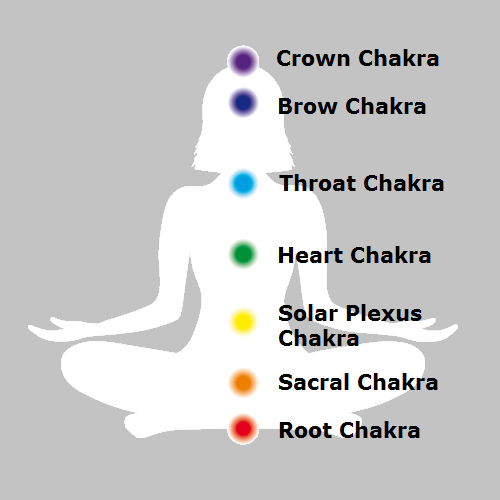
There are seven main chakras, from top to bottom: the root chakra, the sacral chakra, the solar plexus chakra, the heart chakra, the throat chakra, the brow chakra, and the crown chakra.

The root chakra is located at the bottom of the spine. It is the primary chakra of our body which acts as an energy pathway to connect us to our physical bodies and the earth. The root chakra allows us to keep our balance and is associated with the color red which represents passion, strength and fire. It is also called the base chakra.

The Seven Main Chakras

The Seven Main Chakras

Functions of the Root Chakra

Physical health


Physically, it is responsible for the proper functioning of the legs, feet, bladder, kidney and of course, spine. The position of each chakra is in correspondence to our endocrine glands that are responsible for the release of hormones in our body, keeping them in balance and controlling major nerve functions. It keeps us nourished and healthy.

An imbalanced root chakra can cause several problems such as fatigue, hemorrhoids, arthritis, constipation, lower back pain, weight issues and diarrhea. It can also cause sleep disorders and feeling cold due to poor circulation.

Increased confidence


When the root chakra is balanced, you feel more secure and gain more confidence. You will perform all tasks in life with increased confidence and enthusiasm.

When it is imbalanced you will feel tired, overly cautious and afraid of change. You will feel insecure and you will trust yourself and others less. You will not respect yourself and others and you will be frequently clumsy and lethargic.

Dealing with conflicts and problems


When balanced, the root chakra will give you the ability to deal with problems and handle conflicts with a calm and constructive mind. You will manage these conflicts smoothly and troublesome matters will be incapable of scaring you.
When the chakra is blocked you feel overly cautious. Also it will cause insecurity and violent behavior, aggressiveness. You’ll be angry at everything and and prone to do reckless things.

Feeling grounded


This chakra is related to the basic needs in life such as food, shelter, warmth and comfort. If balanced, it will keep you on track to get these needs met.

However, if the balance is lost, any task seems difficult. Money problems arise, you lose confidence, resort to violence, become selfish and cannot find happiness. You get “stiff”, uptight. You turn greedy and materialistic. You become more sexually manipulative, impulsive and also domineering.

Ways to Heal the Root Chakra


If you feel that your root chakra is blocked, or overwhelmed with negative energy, the following ways can help you clear the root chakra.

Think red


The root chakra is related to the color red so envisioning  a red flame glowing brightly at the base of your spine can help clear the root chakra. You can start with a meditation visualizing the red flame at the base of your tailbone and picture the light extending down to your legs and feet and grounding you to the earth.

The Root Chakra Symbol

The Root Chakra Symbol

Sing  and dance


Dancing and singing with the door closed and without a care in the world can help you express your freedom and hence clear your root chakra. Singing also helps clear the throat chakra.

Take a bath or shower


Express your love for yourself fully by cleansing and purifying your body with a nice hot bath. This is an excellent way to clear your root chakra.

Go for a walk


Going for a walk with your mind into each and every step you make while grounding with the earth will also help clear the root chakra.

Hug a tree


And of course, you can hug a tree to get grounded :).

Reiki and the Root Chakra


Reiki is an excellent healing technique for the chakras that are imbalanced, dysfunctional or even blocked due to problems of the body, mind and spirit. Keeping your chakras balanced and functioning will prevent problems and illnesses. Reiki involves hand placements targeting all major chakras to remove all negative energies and blockages that stand in the way of your normal energy flow like a rock in a stream. After these negative forms of energies are removed, your stream of energy is recovered and flows smoothly through your body. It is a natural and safe method of curing that can be used by anyone.

During healing hands are placed on the affected areas that need to be cured. Reiki has been known to be one of the most effective methods of curing the root chakra. Even though the root chakras is at the base of the spine, hands are placed at somewhere near the location of the spine.

Gemstones can also be used for healing. As the root chakra is concerned with the color red, rubies, garnets and red jasper can be used to clear the root chakra.

Steps for performing Reiki healing on the Root Chakra


Reiki practitioners might have their own technique for balancing the root chakra, below is just one of the methods that many find effective.
  1. Lie down and relax. Make sure you are comfortable and do not cross your arms and legs.
  2. Place both of your hands with your palms down on your lower abdomen.
  3. Visualize a river of energy passing down from the palm of your hands turning into a fast turning bright red ball. Direct your thoughts towards this energy ball and the energy that is being sent.
  4. You might feel some warmth spreading through your body as the chakra gets cleared.
Healing of the Root Chakra with Reiki brings back all the comforts in our life; it brings calm and tranquility, and leads a healthy and happy life.

All about the Sacral Chakra: Healing the Sacral Chakra with Reiki


The Sacral Chakra Symbol

All about the Sacral Chakra: Healing the Sacral Chakra with Reiki


A few days ago we published an article about the root chakra. This article continues the series.

The sacral chakra or Swadhisthana is the second chakra.

It deals with feelings of sexuality that allow expression of emotions when the chakra is open without being overly emotional or overactive. Emotions are kept in balance and you become more passionate and lively. When the sacral chakra is balanced, you will have no issues dealing with sexuality.

The sacral chakra is situated in the lower abdomen about 1-2 inches below the navel. It controls your sexual organs and reproductive system including ovaries or testes. It also controls the bladder and the kidneys.

Functions of the Sacral Chakra

Physical health


While this chakra is responsible for the proper functioning of the reproductive system, its organs and hormones, the energy of the sacral chakra is also responsible for the administration of the lymphatic and circulatory system and the urinary trac. As the sacral chakra mainly deals with purification, the chakra plays a role in removing toxins out of the the body. Some say that the sacral chakra is represented by the spleen in men and uterus in women.


The Seven Main Chakras

The Seven Main Chakras

An imbalance in the sacral chakra can cause many physical issues such as urinary problems, kidney stones, lower back pain, gynecological problem and prostate problems. It is therefore important to keep this chakra in balance to maintain a healthy physical health and stay away from such problems.

Emotions


The sacral chakra being the ‘seat of emotions’ it’s mainly responsible for producing joy, ambition, love for yourself, healthy relationships and creativity. When this chakra is in balance, you are more comfortable with expressing your emotions and you do not get suppressed by other people’s power. However, if this chakra is blocked or dysfunctional then you will become shy, helpless, and weak.

Since the sacral chakra governs the reproductive system, it also deals with the stimulation of the production of various sexual hormones or hormones that develop pleasure, joy and other emotions.

Basically, your chakra is in balance when you sexual energy and sex drive, and are comfortable with having a sexual relationship with someone and you feel no negative emotions while having sex. You can express your power easily and sex is done for a fair exchange and it’s not weighted on one side only.  You have a blocked sacral chakra when you do not have any sexual desires and try to avoid having sex as much as possible, hence reducing its importance in your life. You do not feel sexual sensations normally and these sexual sensations are often weak and disappointing.

Also, when this chakra is balanced, there is no neediness, no feeling clingy, and therefore no jealousy.

Honor and power


This chakra is responsible for ‘fair exchange’ or having similar ideas with others. When this chakra is balanced, you naturally give and receive love, affection, flirt playfully with no guilt or shame, in a beautiful and natural “dance”. People with a balanced sacral chakra are not afraid of expanding their boundaries, communicating their needs, and are comfortable listening and attending to others’ needs.

You can cause harm to the sacral chakra when you engage in means of taking revenge, expressing too much power and pressure and suppressing someone with your sexual desires.

Healing the Sacral Chakra with Reiki


Reiki practitioners might have their own technique for balancing the sacral chakra, below is just one of the methods that many find effective.

The Sacral Chakra Symbol

The Sacral Chakra Symbol

  1. The Reiki practitioner will place their hands by the patient’s sacrum. Some practitioners unblock the chakra by rotating to the right for females and for males, they rotate to the left – but it’s better to do what feels right for you, or if you’re not certain, just send energy to the area, it will do the right thing :). This can be done on the front or the back of the person. This not only unblocks the area, but is also known to help with reproductive problems and prostate problems.
  2. Some practitioners will associate the blockage with mantras. The first is often the ‘vam’ sound. Others prefer aroma therapy to clear this chakra such as the usage of sandalwood or ylang ylang oil. Gemstones can be used as well to purify the chakra such as carnelian and moonstones.
  3. When the Reiki healing is finished, you will feel that the aura surrounding this chakra will glow orange in its pure state. Many people often tend to sleep for more than eight hours when the chakra is cleared in a fetal position. You may also envision moonlight and clear water after or sometimes even during the process of Reiki.
The chakra opens to universal energies and once it is unblocked you will feel the freedom of expressing your emotions without any discomfort or displeasure. By healing your chakra, you will not only heal your physical self which includes your reproductive system and other organs, you will also have cleared your emotional and sexual blockages.

All about the Solar Plexus Chakra: Healing the Solar Plexus Chakra with Reiki


The Solar Plexus Chakra Symbol

All about the Solar Plexus Chakra: Healing the Solar Plexus Chakra with Reiki


We’re continuing the Chakra Series today, with the Solar Plexus Chakra.

According to Hindu tradition, the solar plexus chakra is the third chakra which often deals with raw emotions such as frustration, anger and intuitions. The solar plexus chakra or manipura which means ‘city or jewels’ or also commonly thought of as the diamond, is the center of energy for feelings of sensitivity and power. When the chakra is in balance, you feel confident, zealous, calm, cheerful, and self respectful. It also ensures that you are expressive about your feelings and that you are outgoing, flexible and can handle problems with a calm mind. It is called the solar plexus chakra because of its location being close to the solar nerve plexus.

Functions of the Solar Plexus Chakra

Maintaining physical health


This chakra manages the autonomic nervous system, stomach, gall bladder, large intestine, liver, pancreas. Also the whole digestive system and muscular system are governed by this chakra.

The solar plexus chakra is also responsible for cellular respiration. Every system or organ in the body that can be visualized with fire to fuel them or simply, those that produce energy, cause purification and those that function or create movements utilizing this energy are all administered by this chakra. Even the eyes are governed by the solar plexus chakra.

Issues with the digestive system, arthritis, diabetes and hypoglycemia are some diseases and physical problems connected to the imbalance of this chakra.


The Seven Main Chakras


The Seven Main Chakras

Emotions


Fiery emotions or raw emotions are controlled by this chakra. Thus these emotions include anger, zeal, courage, confidence and frustration. Also warm feelings such as joy, cheerfulness, and spontaneity are controlled by manipura. Gut feelings or intuitions are also connected to this chakra.

Depression, frustration, isolation, doubt, lethargy or anger are signs of imbalance in this chakra. Removing the negative energies that block the chakra goes a long way in helping it heal.

Balance


The solar plexus chakra requires everything to be well organized and set up properly as it does not work well with disorder or chaos. It also requires all the aspects of a given situation to be considered without condoning.

Inability to deal with chaos is related to this chakra’s imbalance – as it cannot restore order.

Resolving conflicts


Peacefully resolving a conflict comes under this chakra’s domain. It is the capability of bringing two groups to a solution without hurting anyone and leaving everybody satisfied.

Actions and willpower


The most important function of this chakra is to exhibit feelings of courage, motivation, strength and happiness. The prana or inner battery of the body when fully charged releases energy to boost such emotions enhancing the level of confidence and courage to fulfill one’s dreams. Manipura is the key to which one can make decisions, the right actions and face whatever life has in store.

Inability to work hard, procrastination, apathy, being dominated by personal habits and being controlled by others are some factors related to imbalances of this chakra.

Self respect


A balanced solar plexus chakra gives you a feeling that you are as important as any other in your society. Thus allowing you to create or negotiate boundaries for yourself and stand upright to those boundaries without changing them. You will be able to judge what is good and what is bad for yourself and avoid actions that have negative consequences. You feel independent.

An imbalanced manipura will make you easily controlled by others; you’ll lose self respect, do what others want you to but uncomfortable with it and constantly worrying about what others think.

Clearing your solar plexus chakra


The following are ways to clear your solar plexus chakra:
  • Spend some time in the sun
  • Exercise and indulge in various sport activities
  • Finish off tasks that you have left incomplete. Clean out a messy room, for example
  • Put some effort in dressing up and grooming yourself. Look good and feel good
  • Set a goal and achieve it. You can break the task into doable chunks and make sure you take some breaks. You will feel good after you complete the task
  • Be more assertive. Make decisions and stick to them
  • Use scents such as rosemary or lavender
  • Decorate your room and turn it yellow so that it gives you energy and spirit
  • Remember that you are strong and worthy of all your desires. Stand up for yourself and accept challenges


Reiki Healing for the Solar Plexus Chakra


Reiki practitioners might have their own technique for balancing the solar plexus chakra, below is just one of the methods that many find effective.

The Solar Plexus Chakra Symbol

The Solar Plexus Chakra Symbol

  1. Place your hands above the navel to trigger the energy center, and start sending Reiki energy
  2. Some practitioners recommend that for females, rotate to the left and males, rotate to the right – but others disagree. Try both ways and see what feels right for you.
  3. Mantras can also be used which in this case is the tone of E for the mantra ‘ram’. The vibrations caused during the delivery of this mantra will cause the negative energies to flow out of the chakra.
  4. Aromatherapy can also be used with lavender, rosemary and bergamot to unblock the chakra
  5. If you’re into gemstones, use as amber, yellow topaz, tiger’s eye, and citrine
While going through the healing process, you may see visions of sunlight and sunflower :).

All about the Heart Chakra: Healing the Heart Chakra with Reiki


The Heart Chakra Symbol


This is the next article in the Chakra series, and it’s all about the Heart Chakra.
The heart chakra, or Anahata, is the fourth of the seven main chakras. It is the center of unconditional love.

It is responsible for the administration of:
* the circulatory system, including the heart
* the respiratory system
* the arms and hands
* shoulders
* ribs and breasts
* diaphragm
* thymus gland

Many emotions, such as love, hatred, grief, joy, jealousy, fear of betrayal, feelings of isolation and loneliness and the ability to make ourselves feel better are all centered in the heart chakra.

Functions of the Heart Chakra

Physical health


The heart chakra governs the lungs, heart, blood circulation – it controls the essential life forces that are vital for the human life. The heart chakra is also associated with the thymus gland which plays a role in producing T-cells that are essential for a healthy immune system.

The Seven Main Chakras


When the heart chakra is blocked, you will face health issues such as lung or breathing difficulties, high blood pressure, lung diseases, breast cancer, etc.

Love and other emotions

In order to maintain a healthy heart chakra, you must learn to love yourself and others around you. Do not complain about things around you and what you do not have. Instead, enjoy and appreciate the things that you already have. Life is a wonderful thing.

Remember the Reiki percept that says “I’m grateful for my many blessings.”
Situations which might cause emotional distress such as divorce, separation, isolation, abandonment, grief caused due to death, or emotional abuse can seriously damages the heart chakra. If the heart chakra loses balance one becomes prone to many illnesses and may also suffer from emotional conditions. Unfavorable outcomes to such situations include feeling lonely, betrayed, being defensive, controlling, paranoid and possessive.

Healing the Heart Chakra


Here are some things which help in healing and balancing the heart chakra.

Green


The heart chakra is associated with the color green. Enjoy and appreciate nature, and don’t harm it.

The Heart Chakra Symbol

The Heart Chakra Symbol


Visualize a strong green flame or light engulfing your heart towards its center. While inhaling imagine a soft green light filling up your heart and your body. Visualize that you are removing negative energy out of your body while exhaling. Do not put too much effort while exhaling, stay focused on inhaling.

Yoga


In order to maintain a balanced heart chakra, it is always a good idea to practice yoga. If your heart chakra is blocked, it’s likely that your throat chakra is blocked too. The camel pose works well for both chakras to balance them up. To execute the camel chakra focus on extending your lower back while concentrating on stretching and opening your upper back. Your yoga teacher can give you more information and guidance.

Forgive and forget


Some say that the best solution to maintain a balanced heart chakra is to forgive yourself and others. It is always best to let go of the past and focus on the present moment and the many things you can be grateful for right now, also looking forward just a bit, to a better future. If you keep rewinding in your mind past situations that trouble you, you will continue feeling frustrated, angry, lonely or betrayed. Counseling, or even talking to a friend, might help.
Also, the Sedona Method is a very efficient way to learn to let go.

Exercise


Exercise is good for a healthy heart. If you think vigorous exercising routines are too difficult for you or if you feel that you do not have time for exercise then it will help to set up small goals like taking the stairs or walking to the market nearby instead of taking a ride.

Essential oils


Rose oil is an excellent heart healer and is commonly used to fight against depression. Using rose oil can develop positive thoughts and can fill you up with spirit. You will be more optimistic and happy.

Clary sage is also good at combating depression. It is also a nerve tonic and is extremely relaxing to have an aromatherapy with Clary sage.

Reiki and the Heart Chakra


Reiki is one of the most effective ways of healing and balancing the heart chakra. Reiki practitioners might have their own technique for balancing the heart chakra, below is one of the methods that many find effective.
  1. Relax comfortably
  2. Place your hands lightly on your chest in the heart area
  3. Welcome the flow of energy into your heart, and be open to healing, for the highest good
  4. Let your intuition guide you and use the symbols to fine-tune the energy flow
  5. Visualize green or pink light
The mantra ‘yam’ can be used to assist. Gemstones can also be used. Gemstones such as emerald, Kunzite, green jade, rose quartz and pink tourmaline can be used to help clear the heart chakra. These gemstones can be placed at the heart while performing Reiki and can used for longer periods of time. If you’re into aromatherapy, use Rose essence.